
Testosterone Injection Pain: A Trans Guide to Easier SubQ Shots
Testosterone Injection Pain: A Trans Guide to Easier SubQ Shots

Quick take: A little pinch, mild soreness, or a small bump after a testosterone injection can be normal, especially with oil-based T. The goal is to reduce discomfort, protect your tissue long-term, and know the “this is fine” signs vs. the “call a clinician” signs.
Important: This article is educational and does not replace medical advice. Always follow your prescriber’s instructions for dose, needle size, and injection method.
What trans folks are asking about testosterone shots
- “Is it supposed to burn?”
- “Why do I get a lump after SubQ?”
- “I’m bleeding—did I mess up?”
- “Is SubQ less painful than IM?”
- “How do I rotate sites without losing track?”
These questions are common. Planned Parenthood and Fenway both emphasize clean technique, correct supplies, and rotation to reduce pain and scarring. Fenway also specifically notes SubQ uses a shorter needle and goes just under the skin, and that repeating the same spot can increase pain and scarring. (Sources: Planned Parenthood SubQ injection guide; Fenway hormone injection guide.)
Why testosterone injections can hurt
1) The needle (the poke)
A quick pinch is normal. Tension makes it worse when you brace, you feel more.
2) The oil (the after-feel)
Most injectable testosterone is suspended in oil, which can irritate tissue and leave you sore. With SubQ, the oil can sometimes sit in the fatty layer temporarily, creating a small bump that fades over time.
3) Technique + speed
Injecting too fast, going too shallow, or not rotating sites can increase irritation. Planned Parenthood’s SubQ instructions highlight using the correct needle size and a stable, clean setup. (Source: Planned Parenthood.)
SubQ vs IM: which is less painful?
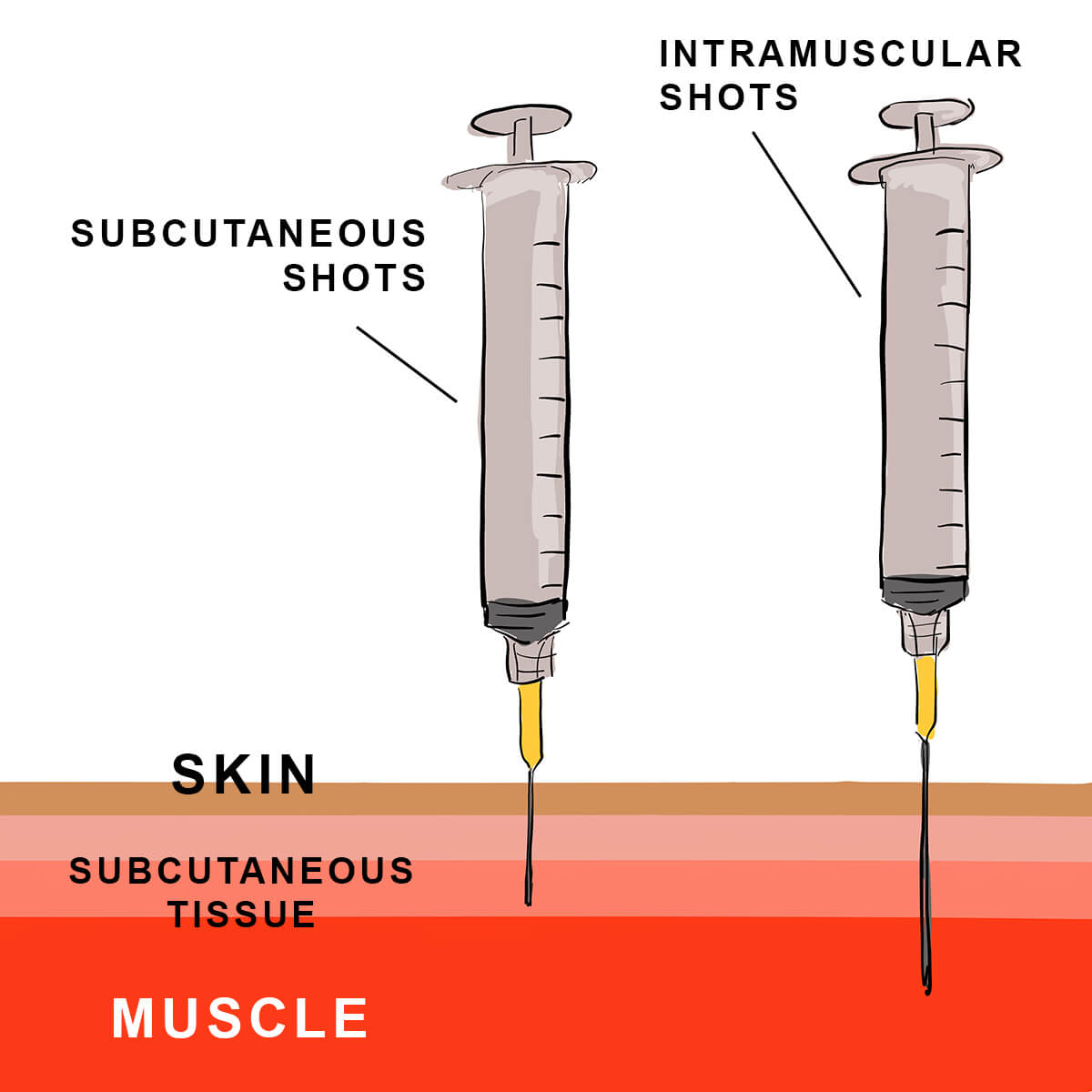
SubQ injections go into fatty tissue just under the skin and generally use a smaller, shorter needle. IM injections go into muscle and often use a longer needle. Many people find SubQ easier to self-administer and sometimes less sore, but bodies vary.
UCSF’s masculinizing hormone therapy guidelines include SubQ testosterone as an option used in studies of trans men, and Fenway’s injection materials describe both SubQ and IM methods and emphasize rotation to reduce pain/scarring. (Sources: UCSF; Fenway.)
Best SubQ injection sites (and how to rotate)
Common SubQ sites include:
- Abdomen (avoid close to the belly button)
- Outer thigh
- Upper arm (fatty area)
Rotation tip: Don’t inject in the same spot over and over. Fenway specifically flags repeat injections as a cause of pain/scarring. Make a simple rotation map (e.g., right abdomen → left abdomen → right thigh → left thigh). (Source: Fenway.)

Step-by-step: a more comfortable SubQ testosterone injection
Set up
- Wash hands and use a clean surface.
- Use fresh, sterile supplies each time.
- Follow your clinic’s needle guidance. Planned Parenthood’s SubQ guide lists common supply setups (draw needle vs. inject needle) and typical SubQ needle gauges/lengths. (Source: Planned Parenthood.)
Make it hurt less (real-world tips)
- Warm the vial/syringe in your hands for a minute or two (warmer oil can flow easier).
- Relax your body (drop your shoulders, unclench your jaw—seriously).
- Ice before, heat after if you tend to get sore (short intervals, don’t freeze your skin).
- Inject slowly to reduce pressure in the tissue.
- Hold steady, then withdraw smoothly.
Aftercare
- If you get a small SubQ bump, gentle movement and time often help. Community discussions frequently describe bumps as oil pooling that fades and can be helped by gentle rubbing, if it’s not too tender. (Source: r/FTMOver30 community thread.)
- Dispose of sharps safely.
What’s “normal” vs “call someone”
Usually normal
- Mild soreness for 1–3 days
- A small bump after SubQ that gradually shrinks
- A tiny spot of blood
Call your clinician urgently if you have
- Spreading redness, heat, or swelling
- Fever/chills
- Severe or worsening pain after day 2–3
- Pus, red streaking, or an area that keeps expanding
Gear that makes shots easier (TGS picks)
Having your supplies organized and consistent reduces stress (and stress increases pain). Here are a few tools that can make your routine smoother:
1) The Shot Kit (stay ready, stay organized)
Shop the Shot Kit — keep syringes, needles, alcohol wipes, bandages, and a small sharps solution in one place so you’re not scrambling every week.
2) Sub Q - InjectEase (steadier shots, less needle anxiety)
Shop InjectEase — helpful if your hands shake, your anxiety spikes, or you just want a more controlled, consistent injection motion.
3) Cross-body bags (discreet carry for travel days)
Shop cross-body bags — for people who do shots away from home or want a dedicated, discreet place for supplies.
Optional add-ons (if you carry these): sharps container, alcohol wipes, bandages, travel pouches.


FAQ:testosterone injection pain + SubQ technique
Do testosterone injections hurt?
Many people feel a quick pinch. Mild soreness afterward can happen, especially with oil-based testosterone. SubQ often uses smaller needles and can feel more manageable for self-injection. (Sources: Planned Parenthood; Fenway.)
Why do I get a lump after a SubQ shot?
A small bump can happen when the oil sits in the fatty layer temporarily. Rotation and slower injection can help, and bumps often fade. If it’s getting larger, hotter, or more painful, contact your clinician. (Source: Fenway + community experiences.)
How do I prevent bleeding and bruising?
Use a steady angle, avoid visibly bruised areas, rotate sites, and apply gentle pressure after withdrawing the needle.
What needle size is used for SubQ?
Many clinics use a shorter, smaller-gauge needle for SubQ injections; Planned Parenthood’s SubQ guide lists common options (e.g., 23–25 gauge, 5/8"). Always follow your prescriber’s exact instructions. (Source: Planned Parenthood.)
Final note
Shots should not feel like a weekly punishment. With the right supplies, site rotation, and a calmer routine, most people can reduce testosterone injection pain significantly. You deserve care that feels steady, safe, and in your control.